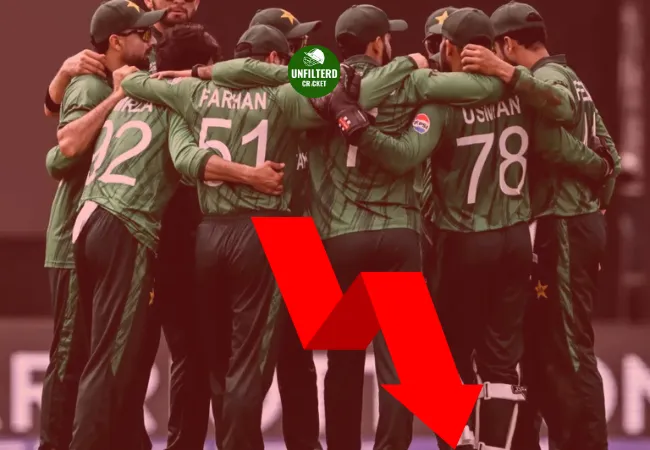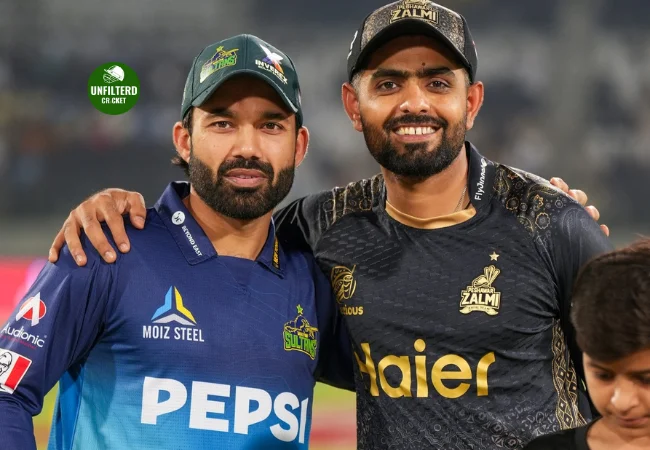
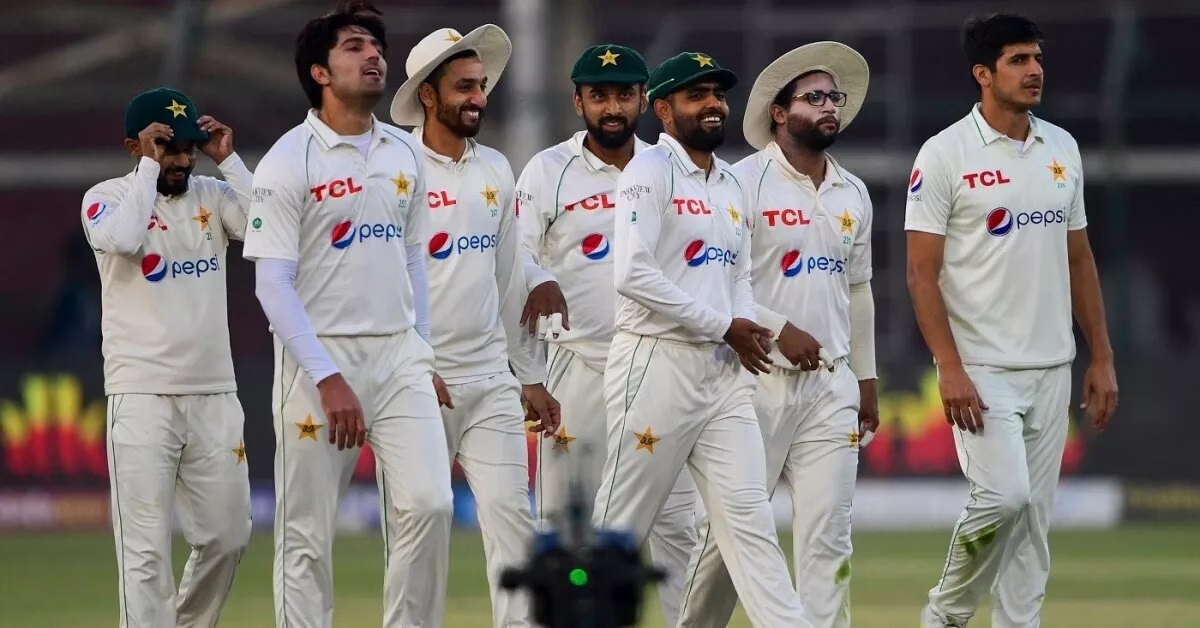
There is a particular kind of grief that comes not from a sudden catastrophe, but from watching something you love decay. Slowly, visibly, almost predictably, while the people responsible look the other way. That is the grief every true Pakistan cricket fan has carried since April 2017, the day Younis Khan played his last Test innings in Bridgetown, Barbados. A few weeks earlier, Misbah-ul-Haq had already hung up his whites. Two giants walked out of the dressing room together. What walked in behind them was a vacuum, and nine years later, nobody has filled it.
This is not just a story about bad results. This is a story about a broken system, a culture of mediocrity dressed up as potential, and a generation of cricketers who were handed everything except the one thing that cannot be coached: the hunger to be great.
The Last of the Warriors
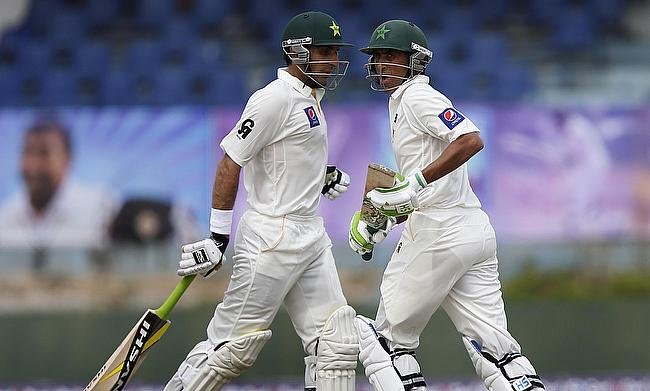
To understand the collapse, you must first understand what Pakistan lost.
Misbah-ul-Haq was not a flamboyant cricketer. He never pretended to be. He was concrete poured into batting gloves, immovable, unyielding, infuriatingly stubborn in the best possible way. He averaged 46.62 in Test cricket, but the number doesn’t tell you about the 3am sessions he spent doing push-ups in hotel rooms, about the ice baths he took voluntarily, or about the dressing room culture of discipline he enforced simply by example. He became Pakistan’s most successful Test captain not because of tactical genius alone, but because he made professionalism non-negotiable.
Younis Khan was different. He was fire where Misbah was stone. 10,099 Test runs. 34 centuries. A man who could bat on a minefield in Johannesburg or a dust-bowl in Colombo with equal ferocity. His technique wasn’t textbook. It was battle-book. He hooked, pulled, drove, and improvised his way through the best attacks in the world, guided by sheer will. When Pakistan needed 400 in the fourth innings, Younis made you believe it was possible.
When they retired, Pakistan did not find their replacements. They found their shadows.
The Systemic Rot: A Structure Built to Fail
The PCB Carousel
The Pakistan Cricket Board has changed its chairman, its selection committee, its head coach, and its team structure so many times in the last nine years that it borders on parody. Misbah himself served as chief selector and head coach simultaneously, an arrangement that would be laughable in any professional sporting body. Ramiz Raja came in promising revolution and left without delivering evolution. Mohsin Naqvi inherited a mess and is still figuring out the mop.
Each new administration arrives with a manifesto. Each leaves behind rubble. There is no continuity of vision, no long-term development framework, and no accountability. Selectors pick players on the basis of domestic form that is itself rendered meaningless by the low standards of the Quaid-e-Azam Trophy. Promising youngsters are blooded, discarded, recalled, and discarded again, never given the runway a Test cricketer needs to mature.
The Domestic Cricket Illusion
The fundamental lie Pakistan cricket tells itself is that its domestic structure is producing talent. It is producing numbers, not quality. Playing against sub-standard bowling attacks on flat pitches in front of half-empty stadiums does not prepare a batsman for Jasprit Bumrah at Lord’s or Pat Cummins in Brisbane.
England’s red-ball revolution gave their batsmen genuine preparation. Australia’s Sheffield Shield remains the toughest domestic competition in the world. Pakistan’s domestic circuit, meanwhile, rewards accumulation over application, survival over skill, and statistics over character.
The result? Batsmen who look polished in Karachi and completely lost in Nottingham.
The Accused: A Detailed Reckoning
Babar Azam: The Idol with Feet of Clay
Babar Azam is the most technically correct Pakistan batsman of the post-Misbah era, and that is precisely part of the problem.
His technique in Tests has been a subject of growing debate. His predominant scoring arc, the on-side flick and the glance, becomes a liability when conditions offer lateral movement. Against the moving ball in England and Australia, he has repeatedly been drawn into playing at deliveries angled across him, nicking behind to the keeper. His footwork against the short ball outside off-stump has been exposed on multiple occasions, particularly by Australian and South African pace attacks.
But beyond technique, there is the question of temperament in a leadership context. Babar as captain appeared almost allergic to aggression, in field settings, in declarations, and in communicating intent to his team. Under pressure, his body language often mirrored the anxiety of his team rather than steadying it. A Test captain must radiate certainty even when he has none. Misbah did that. Babar, for all his individual elegance, never mastered the art.
His fitness, while decent, has never been elite. In the sweltering subcontinental Tests and demanding overseas tours, the physical conditioning of Pakistan’s batting unit has been visibly below the standard of top-tier nations.
Imam-ul-Haq: The Nepotism Debate and Technical Deficiencies
Imam-ul-Haq’s career has been shadowed by his familial connection to Inzamam-ul-Haq, and while that is partly unfair to the player, the scrutiny is not entirely unjust. His selection and continued recall despite repeated failures against quality pace bowling has raised legitimate questions about accountability in Pakistan’s selection process.
Technically, Imam’s primary issue is his vulnerability against the ball that moves away from him off the pitch, combined with a trigger movement that has at times left him stranded neither forward nor back. He has been cleaned up by away-swingers and has struggled to build partnerships under pressure in overseas conditions. His conversion rate from fifties to hundreds has been inconsistent. A player of his experience at this level should be far more reliable.
In terms of fitness and fielding, Imam has been a liability. In international cricket today, where boundary saves and athletic fielding are expected from every position including the slip cordon, carrying passengers in the field is a luxury no team can afford.
Shan Masood: Intent Without Architecture
Shan Masood is a curious case. He has intent. He wants to play Test cricket the right way. But wanting and doing are separated by the kind of technical infrastructure that takes years to build under proper coaching.
His fundamental issue is a bottom-hand dominance that causes him to play across the line more than his natural game should allow. Against high-quality left-arm pace and off-spin, he can look genuinely uncomfortable, particularly when deliveries come back into him. His stint as Test captain was brave in ambition, he clearly wanted to play aggressive, result-oriented cricket, but ambition without execution is simply chaos in motion.
As a leader, he has shown more fire than Babar, but the team has not consistently responded. You cannot build a dressing room culture on the captain’s attitude alone. The players beneath him need to share the belief.
Agha Salman and the Middle Order Mirage
Pakistan’s middle order has been a revolving door of half-chances and unrealised potential. Agha Salman has ability but lacks the consistency demanded at Test level. His footwork against quality spin has been found wanting, and his shot selection under pressure, particularly in the 70 to 90 run range when a big score beckons, has been poor.
The deeper issue is that nobody in Pakistan’s middle order appears to have the psychological architecture for long innings. Younis Khan could bat for seven hours when the situation demanded it. Misbah could dig in for days. The current crop checks out mentally long before they check out physically. A ball is played loosely, a half-chance is offered, an innings that should become a 150 ends at 64.
This is not merely a technical problem. It is a character problem.
The Pace Battery: Brilliance Without Backbone
Pakistan’s one area of genuine sustained excellence has been pace bowling. Shaheen Shah Afridi, Naseem Shah, and Haris Rauf represent a genuinely fearsome attack. But even here, cracks appear.
Shaheen’s fitness record has been a source of frustration. Knee surgeries and recurrent injuries have disrupted his development and denied Pakistan their best weapon at crucial moments. In an era where elite fast bowlers work with dedicated strength and conditioning coaches, physiotherapists, and biomechanics analysts, the PCB’s infrastructure has repeatedly failed to keep its prize asset on the park.
Naseem Shah is a talent beyond argument, but his batting, once a genuine asset, has been inconsistently developed, and his bowling load management has at times seemed reactive rather than proactive.
The issue isn’t the talent. It’s the framework around the talent.
The Intangibles: What You Cannot Coach
Temperament
Test cricket is the only format in sport that truly tests a human being’s mental constitution. You can be dismissed in the morning and have to walk back out in the afternoon. You can be bowled out for 80 and then have to take the field and bowl 90 overs. The format punishes the restless, the undisciplined, and the entitled.
Pakistan’s current Test players show a collective fragility that is breathtaking in its consistency. Batting collapses from 100 for 2 to 150 all out. Capitulations on final-day pitches that require only patience. A team that plays extraordinary cricket for three days and then falls apart on the fourth as if under the weight of their own anxiety.
Temperament is built in the domestic system, in the dressing room culture, and in the standards set by the generation before you. When the giants leave, they take the culture with them, unless someone deliberately preserves it.
Pakistan preserved nothing.
Grit and Physical Courage
Facing a 145kph delivery on a green pitch with the ball moving and a hostile crowd is an act of physical courage. Not all batsmen have it equally. Some have it but cannot sustain it across five sessions. Pakistan’s batsmen have repeatedly been found flinching, not necessarily at the bouncer itself, but at the idea of the bouncer. The tactical targeting of their top order by Australian and South African fast bowling attacks has worked again and again because the players have not found the mental resolve to fight through.
Grit is different from effort. Effort is turning up. Grit is refusing to lose when every circumstance is conspiring against you. Younis Khan had grit. Inzamam had grit. The current generation turns up. They do not always grit.
Professionalism Off the Field
Stories of late nights, inadequate preparation, and players arriving to tour matches undertrained have circulated in Pakistan cricket journalism for years. The PCB’s failure to enforce a professional standard of fitness, preparation, and conduct has created a culture where the bare minimum is often considered acceptable.
Compare this to England, where Ben Stokes ran the team’s fitness standards as a personal crusade upon becoming captain. Or Australia, where the culture of demanding physical standards in the Sheffield Shield feeds directly into how their Test team prepares. Pakistan’s players are talented enough to survive on talent alone in the subcontinent. Overseas, talent without preparation is just potential wasted on a plane.
What Must Change
This is not a hopeless situation. Pakistan has the raw material: the pace bowlers, the occasional batting prodigy, the passionate fanbase, and the financial muscle of a cricket-mad nation. What it lacks is architecture.
A stable selection committee with genuine independence from political interference, committed to three-year cycles rather than three-match panic reactions. A revamped domestic red-ball structure with pitches that replicate overseas conditions, day-night Tests to build adaptability, and a genuine meritocracy that selects on performance under pressure, not on reputation.
A fitness and sports science programme that matches the standards of India, England, and Australia, not in aspiration, but in daily execution. Every player in the national setup should have a fitness benchmark. Falling below it should have consequences.
A dressing room culture built on accountability, where senior players are expected to mentor junior ones, where failures are discussed honestly, and where the legacy of Misbah and Younis is not a haunting but an instruction manual.
And most importantly, patience. Not the patience of complacency, but the patience of a plan. Stick with the right people long enough to let them become great.
The Final Word
Pakistan cricket is not dead. But it is in a coma of its own making, sustained by the life support of white-ball brilliance, occasional fast bowling genius, and the eternal optimism of a fanbase that keeps showing up despite everything.
The road back to being a genuine Test power is long, uncomfortable, and will require people in positions of power to accept responsibility for the mess they have created and inherited.
Misbah-ul-Haq and Younis Khan didn’t just retire. They took an entire era of character, grit, and professionalism with them. The task for Pakistan cricket is not to find players who can replace them.
The task is to build a system that can produce them.
Until then, the ghosts remain in the dressing room, and the cricket world waits.
© Unfiltered Cricket | unfilteredcricket | All rights reserved.